

Nine Men’s Misery: America’s Oldest War Monument and Its Haunted Legacy
Nine Men’s Misery, often regarded as the oldest war monument in the United States, marks a dark and tragic chapter in American history. Established on March 22, 1676, during the closing days of Metacomet’s Revolt—better known as King Philip’s War—the monument is a somber reminder of the brutal conflict between Native American tribes and the early New England colonists. The site, which later gained modern attention through Season 9, Episode 22 of Ghost Hunters on Syfy, is not just a historical landmark but a focal point for local legends and paranormal phenomena.
The Roots of Conflict: Prelude to King Philip’s War
The story leading to Nine Men’s Misery traces its roots to the earlier Pequot War of 1636. This earlier conflict, between the Pequot tribe and English colonists, ended in a devastating defeat for the Pequot people, with hundreds killed, captured, and sold into slavery. Those who survived often sought refuge with other tribes, creating tensions that would simmer for decades.
Massasoit Ousamequin, the Wampanoag leader who forged a vital peace alliance with the colonists, passed away in 1661, leaving his son Wamsutta (or Alexander) as the new sachem. Although Wamsutta initially sought to maintain this peace, tensions escalated when he died under mysterious circumstances after being summoned by the Plymouth Court in 1662. Wamsutta’s younger brother, Metacomet—known to the colonists as “King Philip”—inherited his father’s leadership and attempted to navigate the increasingly strained relationships with the English settlers, whose expanding colonies encroached on Wampanoag lands.
The Breaking Point: The Beginning of King Philip’s War
Relations finally collapsed in 1675 after the suspicious death of John Sassamon, a Christian convert and informant. His murder led to the arrest and execution of three Wampanoags, marking the end of the fragile peace. For years, the English colonists had imposed restrictions, taken land, and demanded disarmament, all while pushing aggressive religious conversions on the Native population. Hostilities boiled over, and violent skirmishes erupted, setting off a brutal and chaotic war.
The Tragedy of Nine Men’s Misery
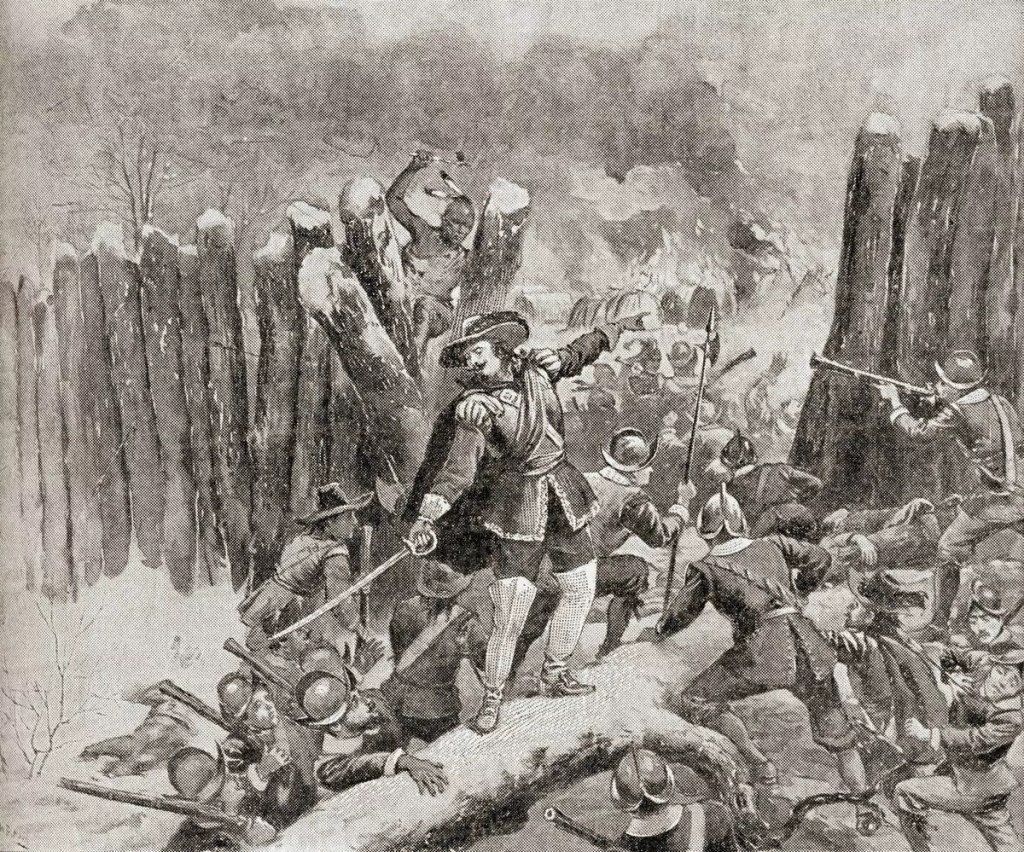
One of the most devastating encounters of King Philip’s War occurred near modern-day Cumberland, Rhode Island. Captain Michael Pierce, leading a company of Massachusetts militia and allied Native scouts, encountered a larger force of Narragansetts and Wampanoags. Despite a valiant effort, Pierce’s men were overwhelmed and nearly all killed. The Native forces captured ten colonists, torturing nine of them to death as part of a ritualistic execution, leaving their remains at what would become known as Nine Men’s Misery.
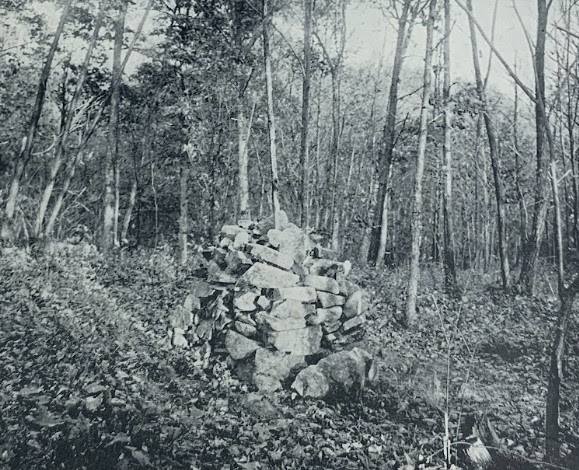
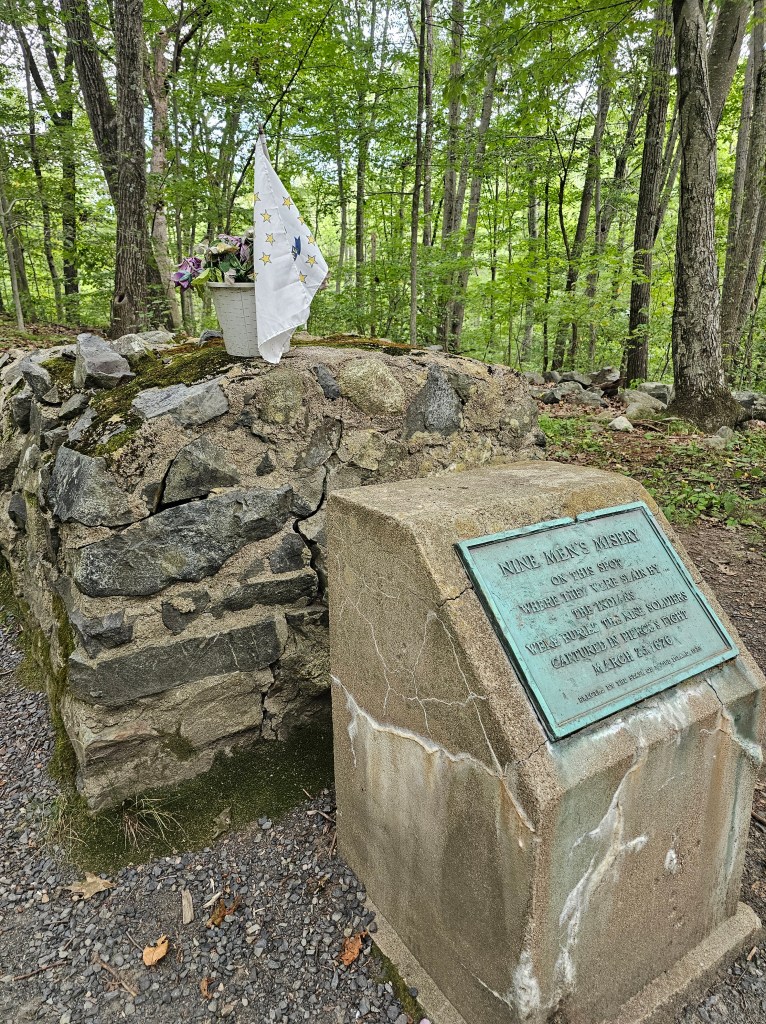
When colonial forces later discovered the bodies, they buried the men and marked the site with a pile of stones, creating what is believed to be the oldest war monument in the United States. This gruesome event was a significant colonial defeat, one of many that underscored the devastating human cost of the war.
Paranormal Phenomena and Local Legends
Given the history of conflict and death, it’s no surprise that Nine Men’s Misery has developed a reputation for paranormal activity. In nearby Mattekonnit Swamp, where artifacts suggest the land held spiritual or agricultural importance to local tribes, visitors report strange sightings and sounds. Some believe that the lingering energies of the land, scarred by violence and sorrow, could be the source of these phenomena.
Situated on the Blackstone River, Cumberland was a strategically valuable area, offering access to resources and trade routes. Its contested status during colonial expansion made it a site of repeated conflict, which some locals believe has left a spiritual imprint on the land. Could it be that the energies from these tragic events are still lingering, echoing across the centuries?
A Region Steeped in History: The Aftermath and Modern-Day Hauntings
After the war, the region continued to be a hotbed of activity and change. During the 1790s, the site was disturbed by medical students searching for the remains of Benjamin Buckland, a colonial figure known for his unusual size. Although local residents halted the excavation, repeated desecration of the graves over the years likely added to the unrest surrounding the area.
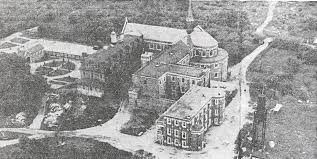
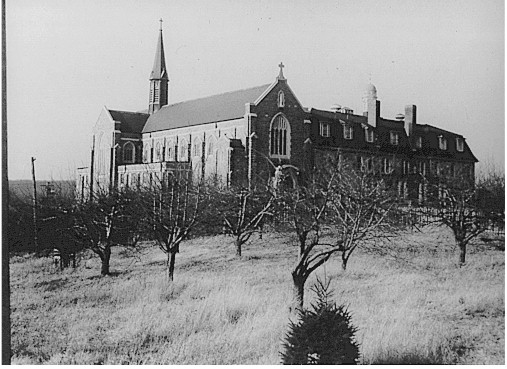
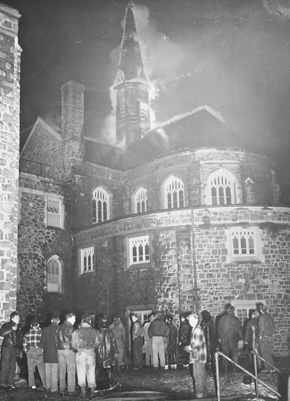
In the early 20th century, Dom John Murphy purchased land in the area, establishing Our Lady of the Valley, one of America’s first Trappist monasteries. The monks discovered the deteriorating monument and sought to preserve it by constructing a cement memorial, which still stands today. Yet, even this act of reverence couldn’t ward off disaster. In 1950, a fire broke out, destroying much of the church and forcing the monks to relocate. Rumors suggest they exhumed and moved some graves, possibly adding to the spiritual turbulence.
Today, visitors to the Cumberland Public Library—built on the former monastery grounds—often report eerie occurrences. From disembodied voices and the sound of footsteps on empty trails to the sight of ghostly apparitions and odd movements in the elevator, the location has become a hotspot for paranormal enthusiasts. TAPS, the Ghost Hunters team, captured compelling evidence of activity, including faucets turning on by themselves, books moving, and unexplained banging sounds.
Haunted or Historical?
Skeptics dismiss the paranormal claims as the effects of an old building settling, the moans, groans, clanks and bangs of an HVAC system, or external noise. Yet, the persistent stories suggest there may be more than meets the eye. Some believe that the land, steeped in centuries of conflict, retains a residual energy, replaying moments of its tragic past. Others wonder if more intelligent haunts—perhaps spirits of those killed at Nine Men’s Misery or even Metacomet’s warriors—linger, still fighting a long-lost battle.
The community remains divided, but whether you believe in the supernatural or not, one thing is certain: the region’s history is rich, haunting, and deeply woven into the fabric of New England’s past. Exploring Nine Men’s Misery and the surrounding areas offers a glimpse into the harsh realities of colonial expansion and the enduring mystery of a land that has witnessed so much death and upheaval. For those who dare, it’s an experience that blends history with the possibility of encountering the unknown.
So, is the area truly haunted, or just haunted by its past? The question lingers, much like the spirits said to roam the trails.
Follow our Socials for more!
Sources
Rhode Island Department of State Website collection on native americans
Cumberland public library website
https://www.cumberlandlibrary.org/monastery-history – used photo of fire
Rhode Island Historical Society
Rhode island Historic Preservation & heritage commission
Second battle of Nipsachuck Archeological report
Google archive- The History of Our Lady of the Valley Monastery – Cumberland Public Library
Historical photo saved as 9mm historical photo saved from Zoe Hammond – Cumberland Public Library
ABC6 piece on Haunted monastery
 Chasing Yesterday Investigations